A good website for a Charleston tourism or hospitality business does one job above all else: turn a visitor already interested in Charleston into a direct booking, reservation, or enquiry — quickly, on a phone, without losing that visitor to a third-party platform. That means fast mobile pages, clear local information, simple booking steps, and search visibility for the phrases travellers use when planning a Lowcountry trip.
Charleston does not need another pretty brochure site. It needs a working sales tool for a city where visitors arrive with high expectations, short attention spans, and plenty of alternatives one tap away.
Why Does Charleston’s Visitor Economy Change What a Website Must Do?
Charleston’s tourism economy is large, competitive, and unusually well measured. According to the College of Charleston’s Office of Tourism Analysis, prepared for Explore Charleston and reported in May 2025, the Charleston region welcomed 7.89 million visitors in 2024 and generated $14.03 billion in tourism economic impact — a record at the time, with tourism accounting for almost a quarter of the local economy.
“In 2024, Charleston welcomed 7.89 million visitors and generated $14.03 billion in tourism economic impact.” — College of Charleston Office of Tourism Analysis for Explore Charleston
That scale cuts both ways: the same report pointed to close to 4.95 million hotel room nights sold in 2024, with average occupancy around 70.6%. Visitors are booking — but choosing between many hotels, inns, restaurants, and tour operators, often in the same neighbourhood.
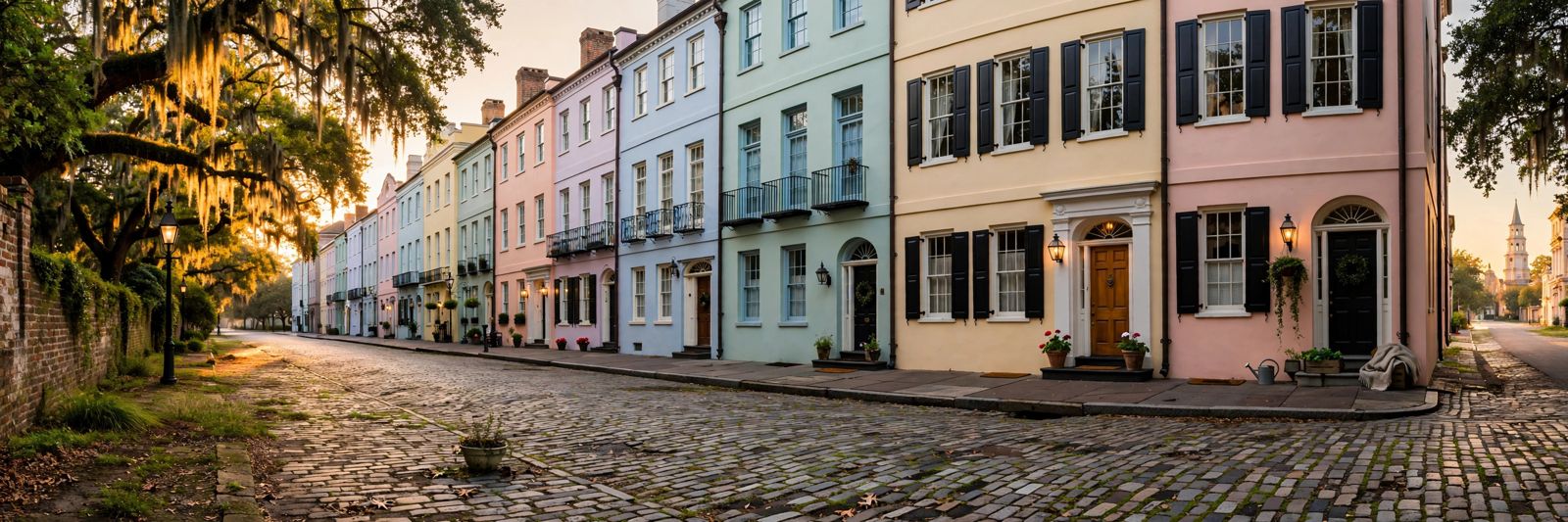
Charleston’s geography sharpens that competition. Much of the visitor experience is concentrated and walkable: the Historic District, King Street, the Charleston City Market, Rainbow Row, the Battery, and Waterfront Park sit close together, with nearby beaches at Isle of Palms, Sullivan’s Island, and Folly Beach. A visitor on King Street searching for “dinner near me” is deciding where to spend money in the next hour — a website that answers slowly, vaguely, or only on desktop loses that moment.
What Do Charleston Tourism and Hospitality Businesses Need From a Website?
Different Charleston businesses need different booking paths, but the foundations are the same — a strong site should make five things effortless:
- Find it fast. The business name, neighbourhood, and what it offers should be clear in seconds — not buried under a slideshow.
- Trust it fast. Real photographs, honest descriptions, clear prices or price guidance where possible, parking and location details, and genuine reviews or review links.
- Book it fast. A direct booking, reservation, ticket, or enquiry step that works on a phone with as few taps as possible.
- Answer the local questions. Where to park, how far it is from the Historic District or the beach, what to expect, cancellation terms, and what makes this place different from the ten similar options nearby.
- Work on mobile first. Most travel research and a growing share of bookings happen on phones, so the mobile experience is the main experience, not an afterthought.
The table below shows how those priorities change by business type.
| Business type | The website’s first job | The detail visitors check first |
|---|---|---|
| Boutique hotel or inn | Direct room bookings | Room types, real photos, location, parking, cancellation policy |
| Restaurant or bar | Reservations and menus | Menu, hours, location, private dining or large-party information |
| Tour or activity operator | Ticket or tour bookings | Meeting point, duration, group size, what is included, weather policy |
| Vacation rental or property manager | Direct stays, not only listings | Availability calendar, total price, house rules, local guide |
| Wedding venue or event business | Qualified enquiries | Capacity, setting, packages, availability, photo gallery |
| Shop or gallery on King Street | Foot traffic and online sales where relevant | Location, hours, directions, featured products or collections |
A Charleston inn on or near King Street, for example, needs to show within one screen which rooms are available, what staying there feels like, how close it is to the sights a guest will walk to, and how to book without leaving the site. A restaurant needs the same clarity in a different form: tonight’s availability, a current menu, and a reservation button that does not require a phone call during a dinner rush.
Local substance matters here. Generic copy about “beautiful rooms” could describe any city; Charleston-specific copy — a short walk to the City Market, Lowcountry dishes such as shrimp and grits, a courtyard in the Historic District, a beach-day add-on for Isle of Palms or Folly Beach — helps visitors and search engines understand where the business actually is. That detail must be specific and honest: real neighbourhoods, real walking distances, real features of the property.
Should You Take Direct Bookings or Rely on Third-Party Platforms?
Third-party platforms — online travel agencies, listing sites, and reservation marketplaces — bring visibility, valuable for a new Charleston property or tour. The problem is cost and control: industry analyses commonly put online travel agency commissions at 15% to 25% per booking, sometimes as high as 30%. On a multi-night stay, that is a substantial share of revenue handed to an intermediary every year — and the guest relationship belongs, in practice, to the platform.
Direct booking reverses that equation, but only if the website earns it. Guests will book direct when the price is clear with no surprise fees, the booking process is as easy as the platform’s, there is a reason to book direct (a better room choice, a flexible policy, a local perk), and the business can be contacted directly when plans change.
The sensible goal is not to leave platforms overnight, but to shift the mix over time: keep platforms for discovery, and build a website strong enough that repeat guests, referrals, and search visitors book direct. Every direct booking protected from a 15% to 25% commission is margin reinvested in the property, the staff, or the guest experience.
How Do Visitors Actually Find and Book Charleston Hotels, Restaurants, and Tours?
Most Charleston trips start with a search, and most of those searches happen on a phone. One widely cited figure puts mobile devices at 70.5% of online traffic for travel and hospitality websites in 2024 (Statista, as compiled by Perk). Even where a final booking happens later on a larger screen, the first impression — and often the shortlist — is formed on mobile.
That has three practical implications for Charleston businesses.
First, local search is the front door. Visitors search for “hotels in Charleston Historic District,” “best restaurants King Street Charleston,” or “things to do near Rainbow Row.” A website needs dedicated, useful pages for its real services and neighbourhoods, with consistent details, accurate directions, and up-to-date hours — a single generic “services” page rarely satisfies those specific searches.
Second, speed is a booking feature, not a technical detail. A visitor comparing three inns on a mobile connection will not wait for oversized photographs to load. Compressed images, fast hosting, and a booking button visible without scrolling matter more than an elaborate animation.
Third, reviews and reassurance close the booking. Visitors cannot inspect an inn, restaurant, or tour in advance, so they look for recent reviews, clear policies, real photographs, and straightforward answers to common worries. A website that hides its cancellation policy, parking situation, or total price creates doubt at exactly the moment a guest is ready to commit.
How Should a Charleston Website Handle Seasonal Demand?
Charleston’s visitor flow is not flat across the year, and a good website should flex with it rather than stay frozen in one season. Peak periods bring higher demand and more last-minute mobile searches; quieter periods reward packages, events, and midweek offers. In practice, that means seasonal landing pages that can be switched on and off without rebuilding the site, an availability and pricing display that stays accurate, content answering seasonal questions (rainy days, harbour visits, beach afternoons), and separate enquiry paths for groups and wedding parties.
Cruise-day visitors illustrate the point: with ships calling at the Columbus Street Terminal, roughly 1.5 miles from the Historic District, downtown restaurants, shops, and tour operators benefit from clear, mobile-friendly information for visitors with only a few hours ashore — opening hours, walk-in availability, tour start times, and durations. The business that states it plainly wins the visit.
How Much Does a Tourism or Hospitality Website Cost?
There is no single honest price for a hospitality website, because the cost depends on design, booking integration, photography, content, and ongoing maintenance. Published industry ranges give a realistic planning frame — these are published ranges from other agencies, not ShanVersed’s prices.
For orientation: one 2025 WordPress cost breakdown published by Developers.dev puts a basic, template-driven site at $500–$5,000 and a custom, strategic business site at $10,000–$35,000, with enterprise platforms above $50,000. Another published guide, from CIS, puts a basic WordPress site for a small business at $5,000–$15,000. Budget in ranges, not single figures, and judge quotes by what is included: design, booking integration, local SEO foundations, content, speed optimisation, and post-launch support.
The cheapest option is rarely the cheapest over two years: a template site with no booking integration, slow mobile pages, and no local search structure quietly loses direct bookings to platforms every week. Judge any quote by what it buys in booking terms — direct booking, fast mobile pages, staff-editable content, and Charleston-specific search visibility.
What Should You Look for in a Web Design Partner?
A web partner for a Charleston hospitality business should be judged on hospitality outcomes, not only on design taste. Look for:
- Booking experience, not just portfolio beauty. Ask how direct bookings will work on a phone, step by step, and test it yourself before launch.
- Local SEO competence. The partner should plan pages around real Charleston searches and set up the business’s search and map presence correctly.
- WordPress ownership and control. The business should own its website, content, and logins, and staff should be able to update hours, menus, and offers without depending on the agency for every small change.
- Speed and mobile discipline. Ask for mobile speed expectations in plain terms, and check the partner’s own recent work on a phone.
- Honest content. A partner that invents reviews, awards, or results should be avoided; visitors and search engines reward accurate descriptions and real photographs.
- Post-launch support. Menus change, rooms are renovated, and tour times shift — a website that cannot be updated easily becomes inaccurate quickly.
What Mistakes Cost Charleston Hospitality Businesses Bookings?
The costliest mistakes are all fixable: a booking button that leads to a phone number instead of a booking step, outdated menus or hours, hidden total prices and policies, one page trying to cover rooms, weddings, dining, and tours, and no easy return path for repeat guests. Separate, focused pages and accurate, current information prevent most of them.
Honest Limitations
A website, however good, cannot fix an uncompetitive price, a weak review profile, or an unfair booking policy. It can present the business clearly and make booking easy — but the stay, the meal, or the tour still has to deliver.
Frequently Asked Questions
Do Charleston restaurants need online reservations, or is a phone number enough?
A phone number alone loses visitors deciding on a phone, outside business hours, or unwilling to call. An online reservation option, with current hours and a menu, captures bookings a phone-only listing misses.
How long does a hospitality website take to build?
It depends on scope. A focused brochure-plus-booking site can often be built in a few weeks; a larger site with booking integration, multiple service pages, and local SEO foundations takes longer. Agree the booking flow, content, and launch checklist before work starts.
Should a Charleston business keep its third-party listings after launching a new website?
Usually yes, at least initially. Listings provide reach while the new website builds search visibility and direct demand; the goal is a healthier mix over time, not an abrupt loss of visibility.
What is the single fastest improvement for most Charleston hospitality websites?
Make the mobile booking or reservation step obvious and easy, and make sure the location, hours, and current offer are accurate. For many businesses, that one fix recovers bookings already being lost.
Ready to Turn Charleston Visitors Into Direct Bookings?
A Charleston tourism or hospitality website should work as hard as the business it represents: welcoming visitors on a phone, answering their local questions honestly, and guiding them to book direct with confidence. ShanVersed builds WordPress websites with that booking-first discipline. To explore how that approach would work for your hotel, inn, restaurant, tour, rental, or venue, visit the WordPress Website Development service page and contact ShanVersed to start the conversation.